
by Alison Jobson | May 6, 2026
If you’ve ever had a finance application declined, you’re not alone. Research from the National Association of Finance Brokers (NACFB) found that more than a quarter of businesses had already been turned down by a lender before approaching a broker.
A no doesn’t always mean the deal isn’t viable or that you won’t secure finance. Often, a rejection is due to how the application has been presented, structured, or interpreted.
In this article, we explain the common reasons for finance applications being declined and how a broker, such as ASC, can change the outcome.
5 most common reasons finance applications are declined
1. The deal doesn’t fit the lender’s criteria
Every lender has a particular focus. Some favour low-risk, straightforward deals, while others specialise in specific types of finance or scenarios, such as development finance, bridging finance, or start-up businesses.
If an application is the wrong fit, it can be declined quickly, even if another lender would have accepted it.
2. Poor presentation of the application
Lenders assess risk as well as the figures. If an application lacks clarity, supporting documentation, or a strong narrative, it can raise red flags.
For example:
- Missing financials or unclear cash flow
- Limited explanation of the borrower’s experience
Even a strong deal can get rejected if it isn’t presented properly.
3. Perceived risk is too high
Sometimes, even if a deal looks sound, it may still appear too risky from a lender’s perspective. This may be due to:
- Property type or location
- Complex ownership structures
Lenders are inherently cautious, so anything that raises concerns may result in a decline.
4. Previous credit issues
Personal or business credit history issues can make a deal high-risk for a lender. However, not all lenders assess credit history the same way. What deters one lender may not be a concern for another.
5. The deal hasn’t been structured correctly
Frequently, it’s not the deal itself that’s the issue, but it’s how it’s been presented to the lender.
For example:
- The wrong type of finance has been applied for
- The loan term doesn’t align with the borrower’s strategy
- The repayment plan doesn’t stack up
If it doesn’t make sense or looks too risky, the lender will reject it.
How a broker turns things around
Working with an experienced commercial finance broker can make a real difference when making a finance application. Here’s how.
1. Matching the deal to the right lender
A broker understands which lenders are most likely to support a specific deal. They know who is flexible, who specialises in certain sectors, and who is actively lending in the current market.
Rather than adopting a one-size-fits-all approach, they target the right lender for the deal. This alone can transform the outcome.
2. Reframing and strengthening the application
A broker doesn’t just pass on information; they shape it into a compelling application.
This might include:
- Presenting financials in a clearer, more persuasive way
- Highlighting strengths the lender may miss
- Addressing potential concerns before they become objections
A broker’s role is to present the full story behind the numbers so the lender can make a confident and informed decision.
3. Structuring the deal differently
With expert knowledge of the industry, a broker has the insight to determine whether a different approach would be more effective.
For example:
- Using bridging finance as a short-term solution before refinancing
- Adjusting the loan amount or term
- Bringing in additional security or a guarantor
These strategic tweaks can turn a decline into an approval.
4. Access to a wider panel of lenders
High-street banks are only one segment of the lending market. Brokers have access to a wide range of specialist lenders, many of whom are more flexible, open to complex deals, and available only via a broker.
Using a broker opens up more options, improving your chance of success.
5. Managing the process from start to finish
Finally, a good broker handles the entire process for you, managing communication with lenders and resolving any issues that arise to keep the deal on track.
A decline isn’t the end of the road
Being turned down for finance can feel hopeless. However, with the right guidance, many declined applications can be reworked, repositioned, and successfully funded.
At ASC, we specialise in looking beyond the initial “no” to find a way forward. We know that in many cases, it’s not that the deal doesn’t work; it just hasn’t been approached in the right way yet.
If your finance application has been rejected, or you’ve got plans that need financing, please get in touch and let’s secure a successful outcome.

by create | Feb 9, 2026
Client: Property development company
Facility: £330,000 development finance
Purpose: Fund the early-stage build costs of a residential development
Client background: A new development company with a strategic opportunity
Our client is an established property developer with a newly incorporated development company. Having purchased two adjacent plots in a prime Edinburgh location and secured planning permission for two semi-detached houses on one of them, our client was seeking funding for the build costs.
The financing challenge: Development finance for an early-stage build
The development required £330,000 to cover the build costs, loan interest, and fees. With the plots valued at £200,000 and a projected gross development value (GDV) of £600,000 for the completed properties, the loan-to-value was 55% of GDV, a conservative ratio that would appeal to lenders.
However, several factors added complexity:
1. New company with limited trading history
Our client’s development company was newly incorporated, so it had minimal trading history. Although the client personally had extensive property experience, lenders often prefer established companies with proven track records.
2. Retained interest requirement
The client requested 12 months of retained interest, with the monthly interest rolled into the loan rather than paid from their own funds. This increases lender risk, as there is no cash flow during the build period to demonstrate that the loan can be serviced.
3. Early-stage project
Although planning permission had been secured for one plot and was pending for the second, and groundwork had been completed, the build hadn’t commenced. Some lenders prefer to finance projects at later stages, when construction risk is reduced.
4. Exit dependent on property sales
The repayment strategy relied solely on selling the completed properties. In a slower market, this could lengthen the loan term and increase lender exposure.
Solution: Securing the funding by mitigating perceived risk
Despite the challenges, the fundamentals were strong, so our strategic approach focused on emphasising them:
1. Promoting the developer’s broader experience and financial strength
Although the development company was new, the individual behind it had substantial property experience and a £2 million portfolio generating nearly £100,000 in annual rental income. We emphasised this track record to reassure lenders that they were backing an experienced developer, not a first-time builder.
We also highlighted the client’s personal residential property as additional evidence of financial stability.
2. Emphasising location and market demand
The plots’ proximity to the Royal Infirmary of Edinburgh was a key selling point. We provided market context showing strong sales growth in the area, supported by guidance from the project architect and local estate agents, who confirmed that valuations were realistic at £300,000 per property.
3. Demonstrating project readiness and straightforward execution
The groundwork had already been completed, planning permission was secured (with the second application expected imminently), and the build itself was straightforward. We positioned it as a low-risk, executable project with clear timelines.
4. Conservative LTV and strong security
At 55% of GDV, the loan-to-value was conservative, providing a significant equity cushion for the lender. We offered a 1st charge over the first plot and demonstrated that even if the market softened slightly, the lender’s position would remain secure.
We approached specialist development finance lenders we knew would recognise that retained interest is standard for projects with clear exit strategies.
Outcome: Full build financing
By presenting the full context, we secured £330,000 in development finance to enable the build to proceed. With 12 months of retained interest, the client could focus entirely on delivering a quality build without the pressure of monthly interest payments during construction.

by Kate | Nov 3, 2025
Property development finance covers a wide range of funding solutions designed for residential, commercial, or mixed-use projects.
Whether you’re embarking on a large-scale new build property development, renovating properties to rent, or expanding your buy-to-let portfolio, securing the right funding is a critical step in turning your vision into reality. Very few developers, whether seasoned professionals or first-timers, have the cash reserves to fund every aspect of a project outright.
That’s where property development finance comes in
1. Development Finance
Development finance is a short- to medium-term funding option designed for building projects, from major refurbishments to ground-up construction. Unlike a standard mortgage, the funds are usually released in stages, known as drawdowns, which are linked to the progress of the build.
Key features:
- Provides an initial lump sum to purchase the land or property.
- Subsequent payments are released as the project reaches agreed construction milestones.
- The interest is rolled up, meaning payments are added to the loan balance rather than paid monthly. This helps keep cash flow available for the build itself.
- Usually requires planning permission before the funds are released.
When to use it:
Development finance is ideal for new-build projects, large refurbishments, or conversions.
Example:
You purchase an old office building to convert into flats. Development finance can cover the purchase cost and ongoing refurbishment expenses, with funds released as work progresses.
2. Bridging finance
Bridging loans are designed for speed. These short-term, interest-only loans provide quick access to funds, often within days, making them perfect for situations where timing is everything.
Key features:
- Short-term solution (usually 1–18 months).
- Interest rates are higher than those of traditional loans.
- Secured against property or land.
- Flexible usage, including purchases without planning permission or for properties deemed “unmortgageable” by standard lenders.
When to use it:
- To secure a property at auction (where completion is required in 28 days or less).
- While waiting for longer-term finance to be approved.
- To renovate or make a property mortgageable.
Example:
You successfully bid on a run-down property at auction that you plan to refurbish and sell. A bridging loan enables you to complete the purchase quickly, carry out the works, and repay the loan when you sell or refinance the property.
3. Buy-to-let mortgage
If your development involves purchasing a property to rent out, a buy-to-let mortgage could be the right fit. This type of mortgage is assessed on the rental income potential rather than your personal salary.
Key features:
- Can be interest-only or capital repayment.
- Lending amounts are typically based on the rental income.
When to use it:
Ideal for adding a new rental property to your portfolio or refinancing an existing one.
Example:
You purchase a flat to rent to tenants. The rental income is high enough to cover the mortgage payments and provide a profit, allowing you to build a portfolio gradually.
4. Commercial mortgage
A commercial mortgage is similar to a residential mortgage, but specifically for commercial property—anything from offices to warehouses and retail units.
Key features:
- Longer-term funding solution (5–25 years).
- Loan amount is based on the property’s rental income potential or your business’s trading performance.
- Suitable for both owner-occupied premises (where your business operates) and commercial investment (where you rent it out to others).
When to use it:
If your project involves purchasing premises for your own business or acquiring income-producing commercial property.
Example:
A café owner wants to purchase the building they currently rent. A commercial mortgage allows them to invest in their business premises and build equity.
5. Second charge mortgage
A second charge mortgage (or secured loan) is taken out on a property that already has a mortgage, allowing you to release equity without remortgaging.
Key features:
- Secured against the same property as your first mortgage.
- Useful for raising additional capital for improvements or development.
- Repayment is secondary to the first mortgage, meaning the first mortgage is repaid first in the event of a sale.
When to use it:
When you have significant equity in a property but don’t want to remortgage, perhaps because your first mortgage has a favourable interest rate.
Example:
You own a property worth £500,000 with £200,000 left on the mortgage. You take out a second-charge mortgage to fund a loft conversion and ground-floor extension.
Other ways to finance property development
While the five options above are the most common, property developers sometimes use alternative methods, such as:
- Joint venture (JV) partnerships: Partnering with an investor who provides funding in exchange for a share of the profits.
- Private investors: Individuals willing to fund a project in return for agreed interest or equity.
- Crowdfunding platforms: Gathering contributions from multiple investors for a particular project.
Choosing the right financing option
Before deciding how to fund your property development, consider the following questions:
- At which stage is my project currently, such as planning, purchase, construction, or refinancing?
- How soon do I need the funds?
- What is my exit strategy (e.g. sale, refinance, rental income)?
- What risks might impact my ability to repay?
When considering property development finance, it’s also essential to account for associated costs such as legal fees, surveyor charges, arrangement fees, and potential overruns in budget or schedule.
The importance of professional guidance
The world of property finance can be complex. Lenders each have their own criteria, and the right structure can mean the difference between a profitable development and a financial disaster. Working with an experienced commercial finance broker can:
- Match you with the most suitable lenders for your project.
- Increase your chances of approval by presenting your application professionally.
- Negotiate competitive terms.
- Save you time so you can focus on delivering your project.
At ASC, we specialise in guiding property developers, from first-time builders to experienced investors, through every stage of financing. Whether you need development finance, bridging loans, buy-to-let mortgages, or commercial lending, our expert brokers can assist you:
- Assess your options.
- Maximise your approval chances.
- Structure finance to suit your goals.
With ASC supporting you, you can focus on what you do best – turning property potential into profit.

by Kate | Oct 31, 2025
What is development finance?
Development finance is a type of short-term loan specifically designed for property development projects. It’s different from a traditional mortgage, which is generally used to purchase an existing property and is repaid over a longer period, such as 20 or 30 years.
With development finance, the funds are provided to cover the significant costs of land purchase, construction, renovation, or refurbishment. It is often the go-to solution for developers, investors, and even businesses wanting to create or transform a property.
Common scenarios for using development finance include:
- Constructing new homes or commercial premises – for example, building a residential housing estate or a business park from scratch.
- Converting existing buildings – such as turning an unused warehouse into office spaces or apartments.
- Renovating properties – upgrading tired, outdated buildings to increase their market value or rental income.
How development finance works
One of the main differences with development finance compared to other loans is that the loan is usually drawn down in stages rather than given as a single lump sum. The money is released in stages aligned with construction milestones in the project.
A typical staged drawdown might look like this:
- Purchase stage – funds for buying the land or an existing property that will be developed.
- Construction stage(s) – releasing funds to pay contractors, purchase building materials, or cover other construction costs
- Completion stage – releasing the final tranche to finish the project, such as fittings, landscaping, and ensuring compliance with planning and building regulations.
Lenders typically release funds once a valuer or project monitoring surveyor confirms that the agreed-upon stage has been completed. This staged process not only keeps the project on course but also reassures the lender that funds are being utilised as intended.
Who uses development finance?
While development finance is often associated with large-scale property developers, it’s not limited to them. It can be suitable for:
- Professional property developers building new residential or commercial projects.
- Experienced investors converting or refurbishing properties to sell or rent.
- Businesses looking to create or improve their premises.
- Individuals undertaking substantial renovation or conversion projects, provided they meet the lender’s criteria.
For larger projects, lenders will usually want to see that the borrower (or their project team) has relevant experience. Completion of similar developments in the past or having a trusted contractor with a strong track record can tick this box.
What lenders look for
To secure development finance, you’ll typically need to present:
- Accurate costings – from purchase price to final finish, with contingencies built in.
- Projected sales or rental income – showing the project’s potential profitability.
- An exit strategy – how you plan to repay the loan (e.g., sale of the property or refinancing).
The more robust your plan and supporting evidence, the greater confidence a lender will have in funding your project.
Key considerations before applying
As with any type of finance, development finance comes with its own set of important factors to consider.
- Interest rates: The nature of development finance is short term therefore expect interest rates to be higher than long term finance.
- Loan-to-value ratio (LTV): Lenders may finance up to 65–75% of the estimated value of the completed project, known as the gross development value (GDV).
- Fees: Expect arrangement fees, legal fees, valuation fees, and possibly monitoring fees as the project progresses.
- Timescales: Most development finance loans are short-term, generally lasting 6–24 months, so your exit strategy must be realistic.
- Security: The loan will typically be secured against the property (and occasionally other assets) to safeguard the lender.
Benefits of development finance
Despite its higher costs, development finance offers several valuable advantages:
- Access to substantial capital – supporting projects that would be unfeasible to finance solely with savings.
- Flexible drawdowns – funds are released as the project advances, aiding cash flow management.
- Opportunity to add value – transforming or creating property can deliver significant profit on sale or continuous rental income.
- Scalability – once you have successfully completed one project, lenders tend to be more willing to finance your future developments.
Risks and challenges
It’s important to be realistic about the potential downsides:
- Cost overruns – unexpected expenses can reduce your budget and profit margin.
- Delays – weather, supply chain problems, or planning difficulties can slow progress and raise costs.
- Market fluctuations – property values can vary, which may impact your ability to sell or refinance at the expected price.
These risks make thorough planning, professional advice, and a strong contingency fund essential.
How ASC can help you secure development finance
Securing the right development finance isn’t about finding the lowest rate; it’s about structuring the loan to suit your project, cash flow, and timeline. At ASC, we specialise in helping property developers, investors, and businesses find tailored finance solutions that work in the real world.
We can:
- Assess your project and recommend the most suitable funding structure.
- Introduce you to lenders who understand your sector and have the readiness to support your type of project.
- Help you prepare a strong application with all the necessary supporting documents.
- Negotiate terms that give you flexibility and room to manage unexpected changes.
With our experience and industry connections, we can help enhance your chances of securing finance swiftly and on competitive terms. For assistance in making your property project a success, please get in touch.

by Conrad Robins | Jun 19, 2025
Project: Start-up unique hospitality venue and golf driving range
Facility: £600,000 development loan
Purpose: Fund the building costs of a new leisure and hospitality venue
Background – From family farm to hospitality venture
Halwyn, situated on the North Cornish coast, offers a unique visitor experience with a 15-bay state-of-the-art Trackman-equipped golf range, a mini-golf course, and rustic feasting barns with glorious views over the Crantock countryside. The project is the brainchild of Will Eustice, a professional quantity surveyor who saw an opportunity to transform his family’s farm in Crantock into something extraordinary.
Challenge – Securing development finance for a start-up business
Will was seeking £600,000 to support the build costs. Securing finance for this project posed difficulties, as it represented a unique requirement: a development loan for a start-up business. The combination of an untested leisure business, commercial development, and start-up model rendered it an unconventional case for most traditional lenders.
Solution – A flexible and merit-based approach
However, we found a lender willing to take a flexible and merit-based approach to underwriting, assessing the project based on its substance and the strength of Will’s background. In fact, the lender was so convinced of the project’s merits that it didn’t request a formal valuation, and we secured a two-year loan facility to be drawn down in stages.
Outcome – A flagship Cornish destination
With the necessary funds in place, Will and his family were able to proceed with the farm’s transformation and bring their ambitious leisure and hospitality vision to life.
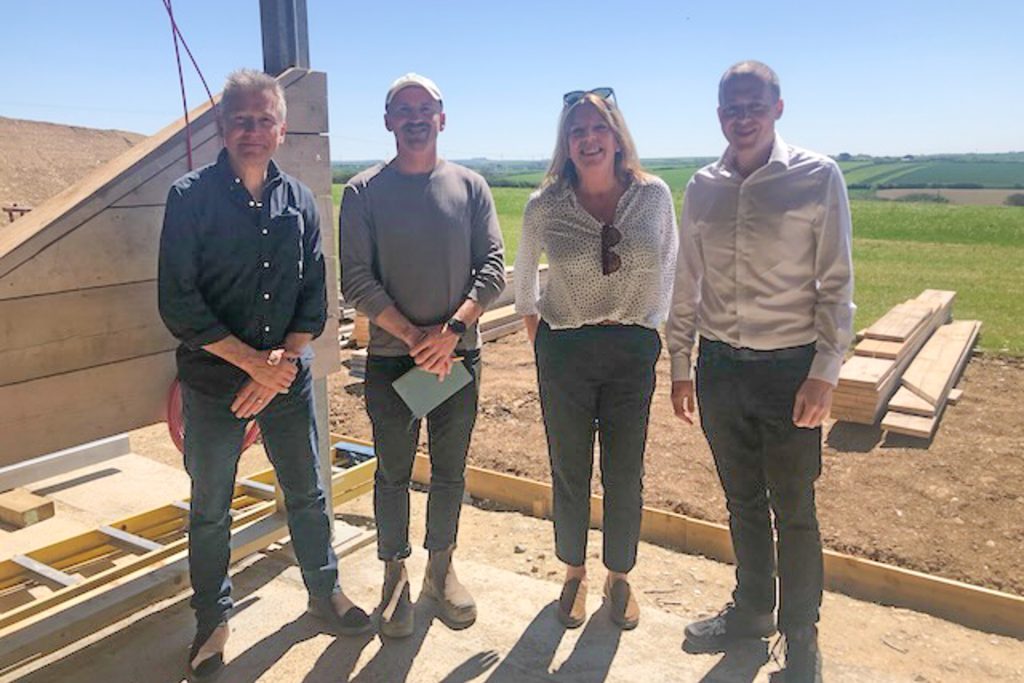
Conrad Robins and Jeannie Cain of ASC visited Halwyn as the project was nearing completion to receive a full guided tour from Will, a proud client with an inspiring attention to detail. Every element of Halwyn has been considered, from the customer experience to food quality, utilising locally sourced produce, and, of course, the golfer!
The venue will provide a great family day out as well as a hub for golf, business hospitality and corporate events.
